
 FR
FR EN
EN AR
AR
Define the brief first
Start by describing your event precisely: date, city, venue, capacity, seating layout and schedule. Without these, any quote remains approximate.
Also specify the dominant content type: speeches, panel, live music, DJ or a mix. Each format requires different mic and PA choices.
Analyse the venue and acoustics
A glazed room, hotel lobby or outdoor space is not treated like a classic conference room. Note ceiling height, materials, columns and technical access.
In Morocco, events often take place in hotels, convention centres or institutional sites in Rabat, Casablanca or Marrakech. Each type has access and ambient noise constraints.
Size for capacity and layout
100 people in theatre seating does not need the same coverage as 100 at banquet tables spread across the room. Layout drives the number of speaker points and required power.
For seated formats facing a stage, front PA with side fills often suffices. For standing cocktails, you need more even coverage across the entire area.
Choose suitable mics and sources
List each speaker and their style: at a lectern, seated panel, moving on stage. Match mic type (gooseneck, wireless handheld, headset, lavalier).
Plan spare mics and rechargeable batteries. Mic failure is one of the most common and visible issues for the audience.
- Gooseneck mic for fixed lectern
- Wireless handheld for audience Q&A
- Headset or lavalier for panel or movement
- Stage monitors for speakers
Evaluate the provider and service level
Ask for references on formats similar to yours. Confirm an operator will be present during the event, not only at load-in.
A good provider asks questions before quoting—they may refuse to undersize to win a bid, which is a sign of professionalism.
Coordinate with other trades
Sound interacts with lighting, video and sometimes structure. Align load-in schedules and designate a single point of contact on event day.
If the event includes LED screens or a tent, factor these in during audio selection to avoid placement or power conflicts.
Checklist before approving the quote
Before signing, verify the quote covers all identified needs.
- Number and type of mics listed
- Technician present during the event
- Load-in and strike duration
- Power and cabling included
- Backup plan for wireless failure
Frequently asked questions
When should I start looking for sound?
Ideally 4–8 weeks before the event, sooner if the venue is atypical or several vendors must be coordinated (structure, lighting, video).
Should I request a site visit?
Yes when the room is large, outdoor or acoustically challenging. For a standard meeting room with a detailed brief, photos and floor plans may suffice.
How do I compare two sound quotes?
Check that quotes cover the same items: number of mics, power, on-site technician, load-in time, stage monitors and wireless options. A low price without a technician is not comparable to a full service.
Can I rent equipment only?
Yes, but you handle setup, tuning and troubleshooting. For professional events, an on-site technician is strongly recommended.
Related services
- Sound & Lighting
Controlled sound and visual ambiance for every event type.
- Event Organization
From idea to delivery: precise organization for successful events.
Related articles
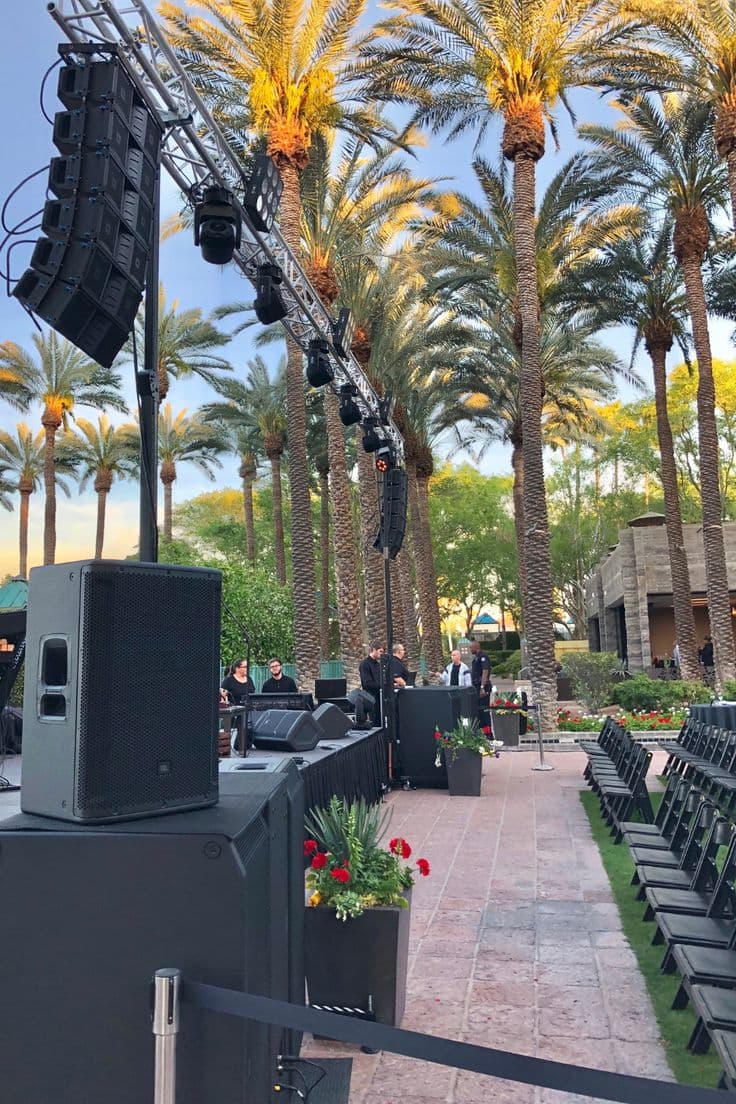
What type of sound system should you choose for an event?
Conference, gala or concert: match sound to capacity, acoustics and format.
Read article →
Event sound systems in Rabat: complete guide
How to size a sound system in Rabat by venue, capacity and format: conferences, ceremonies and corporate events.
Read article →
What sound power for a conference?
How to estimate power needed for a conference: capacity, acoustics, intelligibility and oversizing mistakes.
Read article →
Sound for weddings, conferences or corporate events: what are the differences?
Wedding, conference or corporate: three distinct sound logics for capacity, mics, music and support level.
Read article →